















Dlaczego najwyższe możliwe napięcie ładowania nie zawsze jest najlepszym wyborem — oraz w jaki sposób napięcie, system zarządzania baterią (BMS), temperatura i strategia ładowania współdziałają, aby zmaksymalizować wydajność akumulatorów LiFePO4
Lithium iron phosphate (LiFePO4) batteries have become increasingly popular in energy storage systems, electric golf carts, RVs, low-speed electric vehicles, industrial equipment, backup power systems, and other demanding applications. Compared with traditional lead-acid batteries, LiFePO4 technology offers a combination of long cycle life, high usable capacity, stable performance, and relatively low maintenance requirements.
However, charging voltage remains one of the most misunderstood aspects of Akumulator LiFePO4 operation.
A common assumption is that a battery should always be charged at the highest possible voltage to achieve maximum capacity. In reality, charging voltage should be selected according to the cell configuration, battery management system (BMS), charging current, operating temperature, and application requirements.
Understanding these factors is essential for achieving the right balance between charging speed, usable capacity, safety, and long-term battery life.
Understanding LiFePO4 Cell Voltage
A typical LiFePO4 cell has a nominal voltage of 3.2V. This nominal value describes the cell’s typical operating voltage and should not be confused with its maximum charging voltage.
During normal operation, cell voltage changes according to state of charge (SOC), charging or discharging current, temperature, and the condition of the cell.
To create higher-voltage battery systems, individual cells are connected in series. This is why common LiFePO4 battery packs are available in 12V, 24V, 48V, and higher voltage configurations.
| Battery System | Typical Cell Configuration | Nominal Voltage | Common Maximum Charging Voltage |
|---|---|---|---|
| Single cell | 1S | 3.2V | 3.65V |
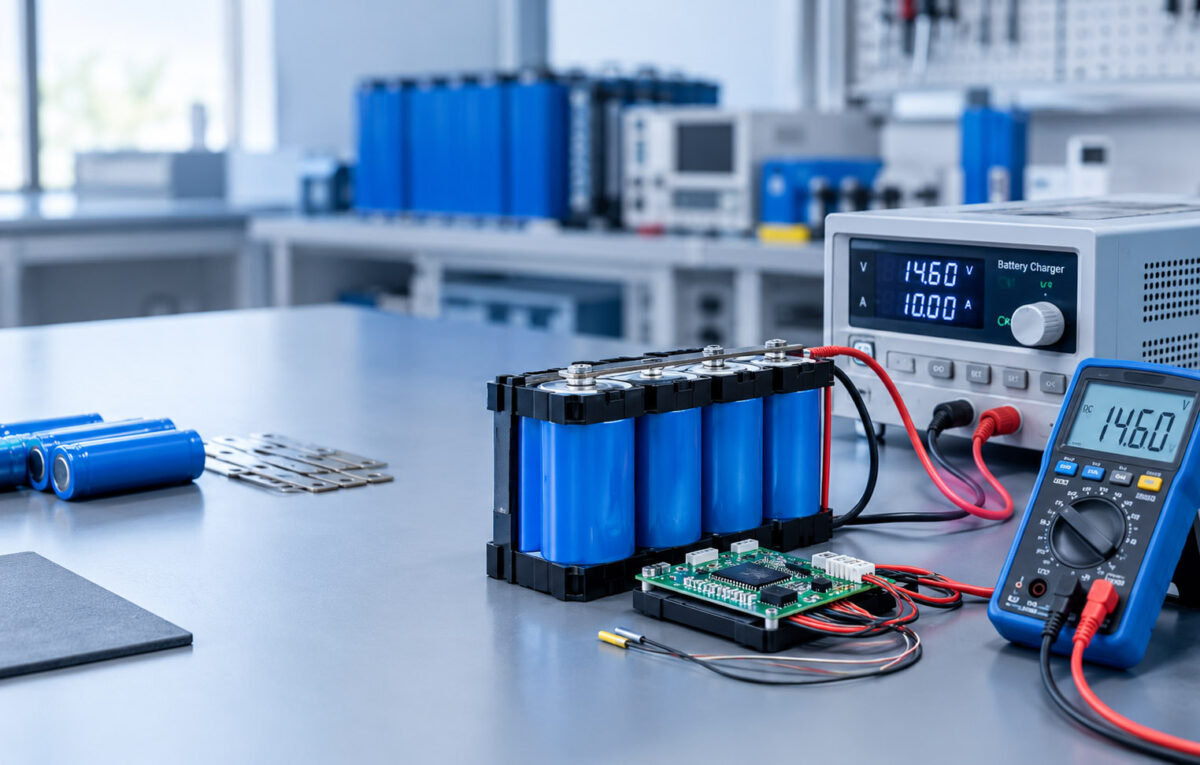
| 12V LiFePO4 | 4S | 12.8V | 14.6V |
| 24V LiFePO4 | 8S | 25.6V | 29.2V |
| 48V LiFePO4 | 16S | 51.2V | 58.4V |
These values represent common configurations rather than universal requirements. The exact charging voltage should always be determined by the specifications of the battery cells and the complete battery system.
Why Is 3.65V Commonly Used as the Upper Voltage Limit?
For many LiFePO4 cells, 3.65V per cell is specified as the maximum charging voltage.
As a LiFePO4 cell approaches this voltage, it is already near a fully charged state. Increasing the voltage beyond the manufacturer’s specified limit does not provide a meaningful advantage and can increase electrochemical stress on the cell.
For example, a conventional 4S LiFePO4 battery can have a maximum charging voltage of:
3.65V × 4 = 14.6V
An 8S battery would correspond to:
3.65V × 8 = 29.2V
And a 16S battery would correspond to:
3.65V × 16 = 58.4V
It is important to understand that this is a maximum charging voltage, not a voltage at which the battery should remain continuously.
For many applications, repeatedly pushing the battery to the absolute upper voltage limit may provide only a relatively small increase in usable capacity while potentially increasing long-term aging.
How CC/CV Charging Works with LiFePO4 Batteries
Most LiFePO4 charging systems use a constant-current/constant-voltage (CC/CV) charging process.
During the first stage, the charger supplies a relatively stable current while the battery voltage gradually rises.
Once the battery reaches the configured voltage limit, the charger transitions into the constant-voltage stage. The charger maintains the target voltage while the charging current gradually decreases.
When the current falls to the specified termination level, the charging cycle is completed or the charger transitions into a standby or maintenance state, depending on the system design.
This charging strategy is important because the battery does not need to receive maximum current throughout the entire charging cycle. As the battery approaches full charge, reducing the current helps avoid unnecessary electrical and chemical stress.
Therefore, evaluating a LiFePO4 charging system requires more than simply looking at whether the charger is labeled 12V, 24V, or 48V. Charging current, voltage limits, termination conditions, and BMS settings all need to be considered together.
Choosing the Charging Voltage for 12V, 24V, and 48V LiFePO4 Batteries
The required charging voltage can generally be estimated from the number of cells connected in series.
12V LiFePO4 Batteries
A typical 12V-class Akumulator LiFePO4 uses four cells in series and has a nominal voltage of 12.8V.
A commonly used maximum charging voltage is:
14.6V
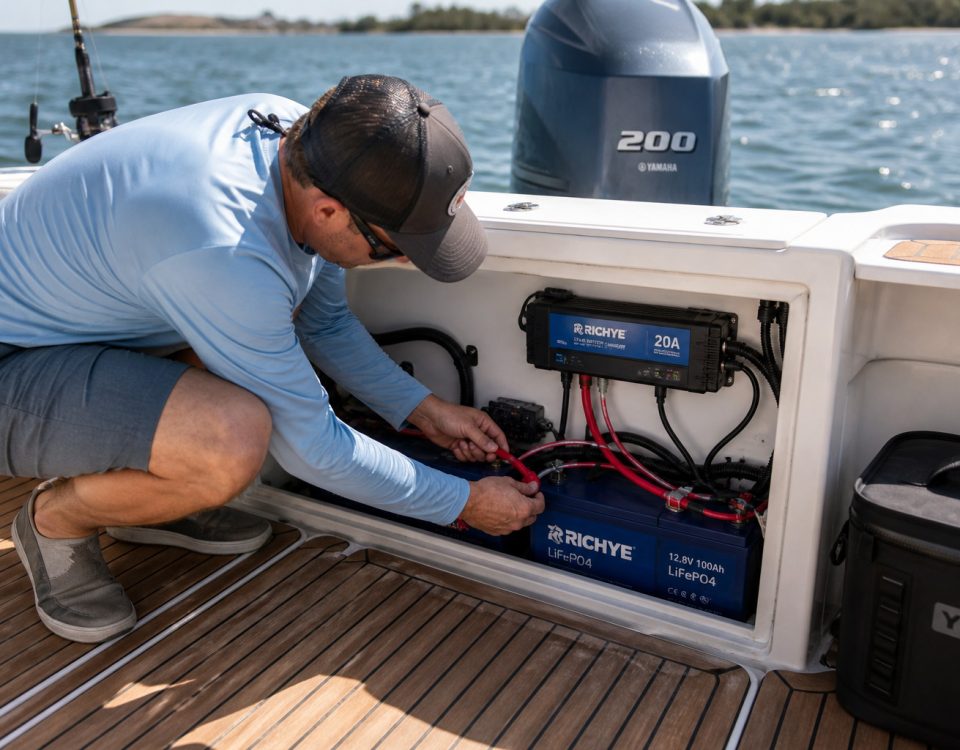
These batteries are widely used in RVs, marine applications, solar energy storage, backup power systems, and various low-voltage electrical devices.
24V LiFePO4 Batteries
A typical 24V-class battery uses eight cells in series and has a nominal voltage of 25.6V.
A commonly used maximum charging voltage is:
29.2V
This voltage class is frequently found in industrial equipment, energy storage systems, electric utility equipment, and certain low-speed electric vehicles.
48V LiFePO4 Batteries
A typical 48V-class LiFePO4 battery uses 16 cells in series, producing a nominal voltage of 51.2V.
A commonly used maximum charging voltage is:
58.4V
48V-class LiFePO4 systems are increasingly used in energy storage, golf carts, electric utility vehicles, industrial equipment, communication backup systems, and other higher-power applications.
As system voltage increases, proper insulation, wiring, connectors, fusing, BMS design, and overall electrical protection become increasingly important.
Why the BMS Matters So Much
The battery management system is one of the most important components in a LiFePO4 battery pack.
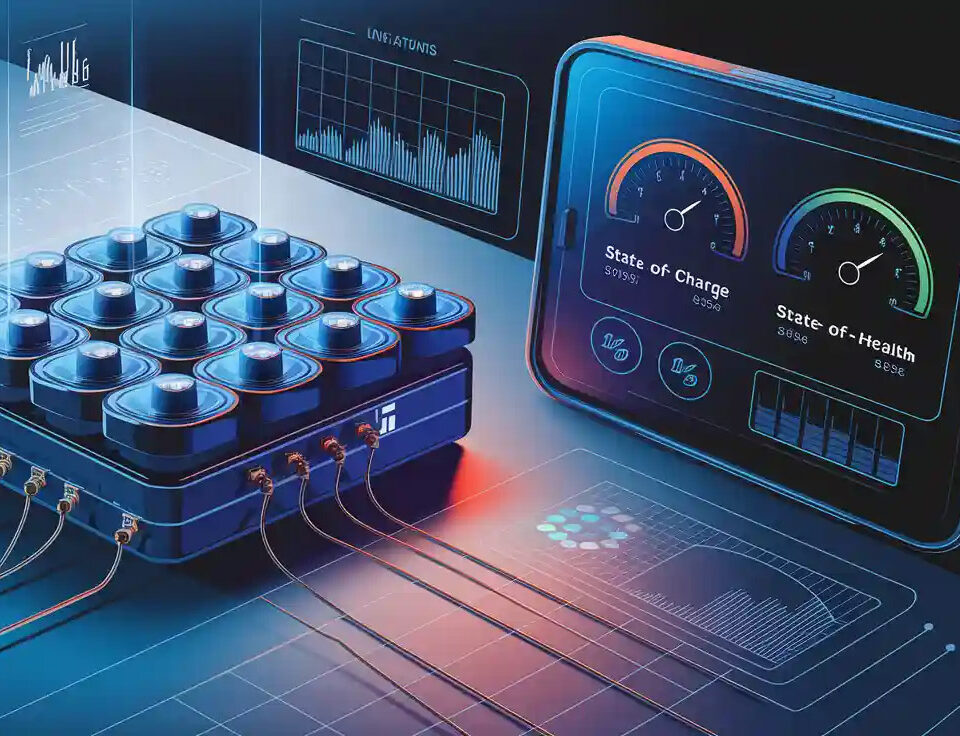
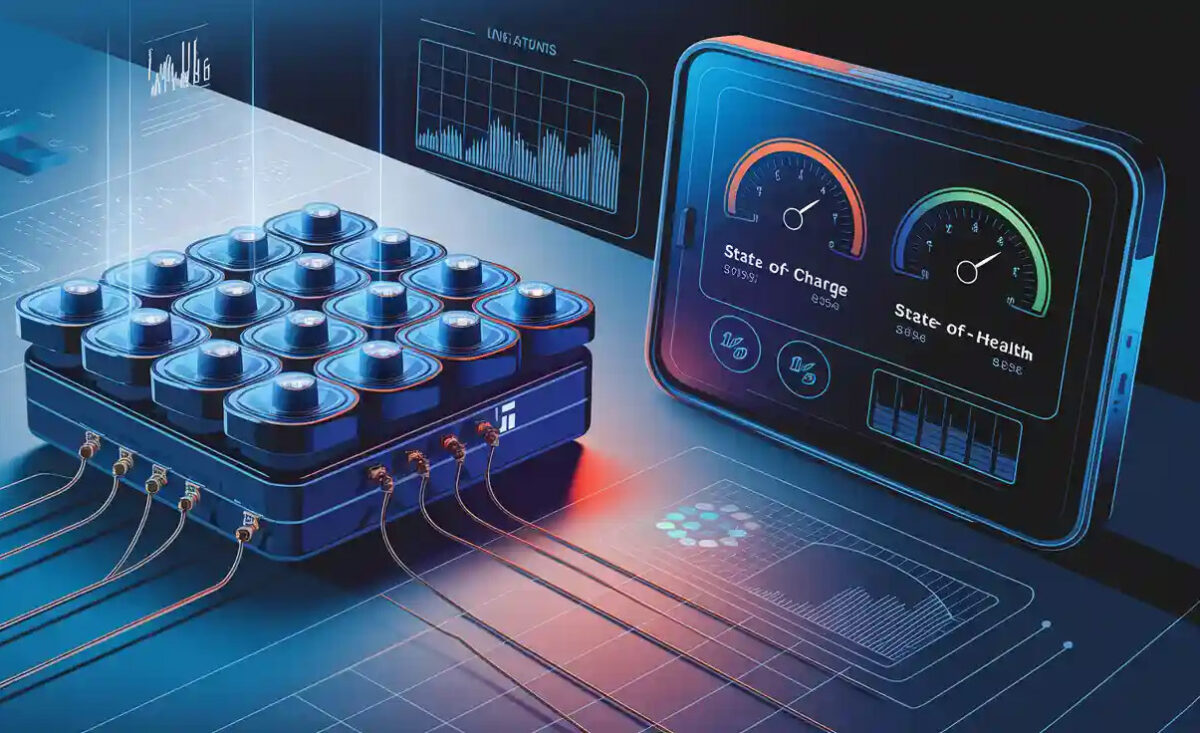
A properly designed BMS can monitor parameters such as individual cell voltage, total pack voltage, current, and temperature. Depending on the system, it can also provide protection against overvoltage, undervoltage, overcurrent, short circuits, and abnormal temperature conditions.
Cell-level monitoring is particularly important in series-connected battery packs.
For example, a 16S battery may have a normal-looking total voltage while one individual cell is already approaching its upper voltage limit. If the system only monitors total pack voltage, this imbalance may not be detected early enough.
For this reason, a reliable LiFePO4 battery system requires more than simply selecting an appropriate total charging voltage. Individual cell protection, balancing behavior, temperature monitoring, and charging control all contribute to the overall safety and performance of the battery.
For RICHYE LiFePO4 battery systems, matching the cells, BMS, charger, and intended application is therefore much more important than simply selecting a charger based on the battery’s nominal voltage.
Temperature Can Change the Charging Equation
Voltage is only one part of the charging equation. Temperature is equally important.
LiFePO4 batteries should not be charged outside the temperature range specified by the cell or battery manufacturer.
Low-temperature charging deserves particular attention. Under sufficiently cold conditions, lithium-ion cells can experience undesirable lithium plating during charging. Repeated exposure to inappropriate low-temperature charging conditions may result in permanent capacity loss and increased internal resistance.
For batteries designed for cold climates, manufacturers may incorporate low-temperature charging protection, temperature sensors, battery heaters, or other thermal management solutions.
High temperatures also deserve attention. Elevated temperatures can accelerate battery aging and increase the stress associated with high-current charging.
This is especially relevant for outdoor energy storage systems, electric vehicles, lawn and garden equipment, industrial machinery, and other applications that may experience large temperature variations.
Does a LiFePO4 Battery Need Continuous Float Charging?
LiFePO4 batteries do not necessarily require the same continuous float-charging strategy commonly used with lead-acid batteries.
If a system requires the battery to remain fully charged and immediately available, maintaining a suitable charging state may be appropriate. However, keeping a LiFePO4 battery continuously at its maximum voltage is not always necessary.
For applications such as RVs, solar storage, and backup power, the battery may spend significant periods in a high-SOC condition without being actively used.
When the application does not require maximum capacity at all times, a charging strategy that avoids unnecessarily prolonged exposure to the highest SOC range can be beneficial for long-term battery aging.
The correct approach therefore depends on the application rather than following a single charging rule for every LiFePO4 battery.
Charging Voltage Is Not the Only Factor That Determines Battery Life
Battery longevity depends on a combination of operating conditions.
Important factors include:
- Charging voltage
- Charging current
- Depth of discharge
- Time spent at high SOC
- Operating temperature
- Charging temperature
- Cell consistency
- BMS configuration
- Charging frequency
- Overall battery quality
For example, simply reducing the charging voltage does not automatically guarantee a longer battery life.
If the voltage is set too low, the battery may never reach the intended state of charge. In some battery designs, insufficient charging can also prevent the BMS from performing its intended balancing function effectively.
The objective should therefore be to establish a charging profile that meets the application’s energy requirements without unnecessarily stressing the cells.
Common LiFePO4 Charging Mistakes
Several charging mistakes occur repeatedly in real-world applications.
Using an incompatible charger is one of the most common. Although LiFePO4 belongs to the broader lithium-ion battery family, different lithium battery chemistries have different voltage requirements. A charger designed for another chemistry should not automatically be assumed to be compatible.
Looking only at total battery voltage is another mistake. In a series-connected battery, individual cell voltage and cell balance are just as important as the total pack voltage.
Charging in extremely cold conditions can also create problems. Low-temperature protection should be treated as an important part of the battery system rather than something that can be solved simply by reducing charging current.
Another common mistake is keeping the battery at maximum SOC continuously when it is not necessary.
Finally, users should not regard the BMS as a substitute for a properly configured charger. BMS protection is primarily a safety and control mechanism; normal charging should still be performed with equipment designed for the battery’s specifications.
How to Select the Right LiFePO4 Charging Strategy
For a quick calculation, the theoretical maximum charging voltage can be estimated using:
Maximum charging voltage ≈ Maximum cell charging voltage × Number of cells in series
Using 3.65V per cell as a common reference:
- 4S = 14.6V
- 8S = 29.2V
- 16S = 58.4V
However, this calculation should be treated as a starting point rather than a universal charging prescription.
Before selecting a charger or configuring a charging system, users should confirm the manufacturer’s specifications for the cell, battery pack, BMS, allowable charging current, temperature range, and intended application.
For a professionally designed LiFePO4 system such as those developed by RICHYE, the goal is not simply to maximize charging voltage. The objective is to establish a coordinated system in which the cells, BMS, charger, thermal conditions, and electrical load operate within compatible parameters.
This approach becomes particularly important for high-cycle applications such as electric vehicles, industrial equipment, energy storage systems, golf carts, and commercial backup power.
Przemyślenia końcowe
LiFePO4 charging voltage may appear to be a simple specification, but it is actually part of a much larger battery-management equation.
A value of 3.65V per cell is commonly used as the upper charging limit for LiFePO4 cells, which translates to approximately 14.6V for a 4S battery, 29.2V for an 8S battery, and 58.4V for a 16S battery.
However, reaching the maximum voltage every time is not necessarily the best strategy for every application.
The most reliable approach is to follow the specifications of the actual cells and battery pack while considering charging current, SOC, temperature, BMS protection, balancing requirements, and the operating environment.
When the charger, BMS, cells, thermal management system, and electrical load are properly matched, LiFePO4 technology can deliver the combination of long service life, dependable performance, and high usable energy that has made it increasingly valuable across modern energy and electric-power applications.