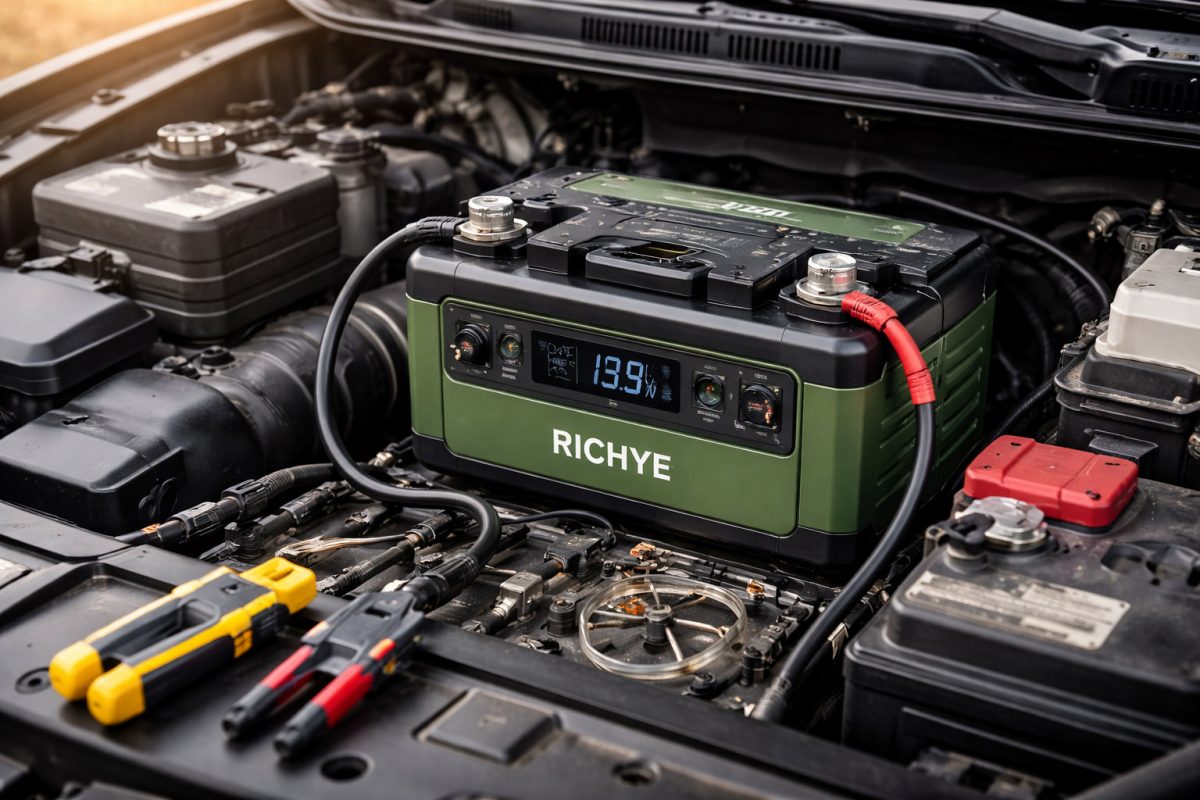


Practical engineering guidance for choosing wiring topology, sizing conductors and protections, and building reliable battery banks for real-world systems
Connecting batteries is more than a wiring exercise — it is the single design decision that defines system voltage, usable energy, charging behavior, and operational risk. Whether you are assembling a battery bank for a solar array, an EV drive pack, an industrial backup system, or a fleet of mobile machines, the choice between series and parallel wiring (or a combination of both) should be backed by electrical fundamentals, safety engineering, and realistic operational constraints. This guide explains the tradeoffs, gives concrete best practices for installation and protection, and shows how to turn chemistry and cells into predictable power systems.
The fundamentals in plain terms
Wiring batteries in series increases system voltage: connect the positive terminal of one battery to the negative terminal of the next, and the voltages add while the amp-hour (Ah) capacity remains the same. Series is how you reach higher bus voltages required by many inverters and traction motors.
Wiring batteries in parallel increases capacity: tie all positives together and all negatives together; the voltage remains equal to a single battery while available amp-hours (and peak current capability) scale with the number of parallel strings. Parallel is the standard choice when runtime is the primary objective.
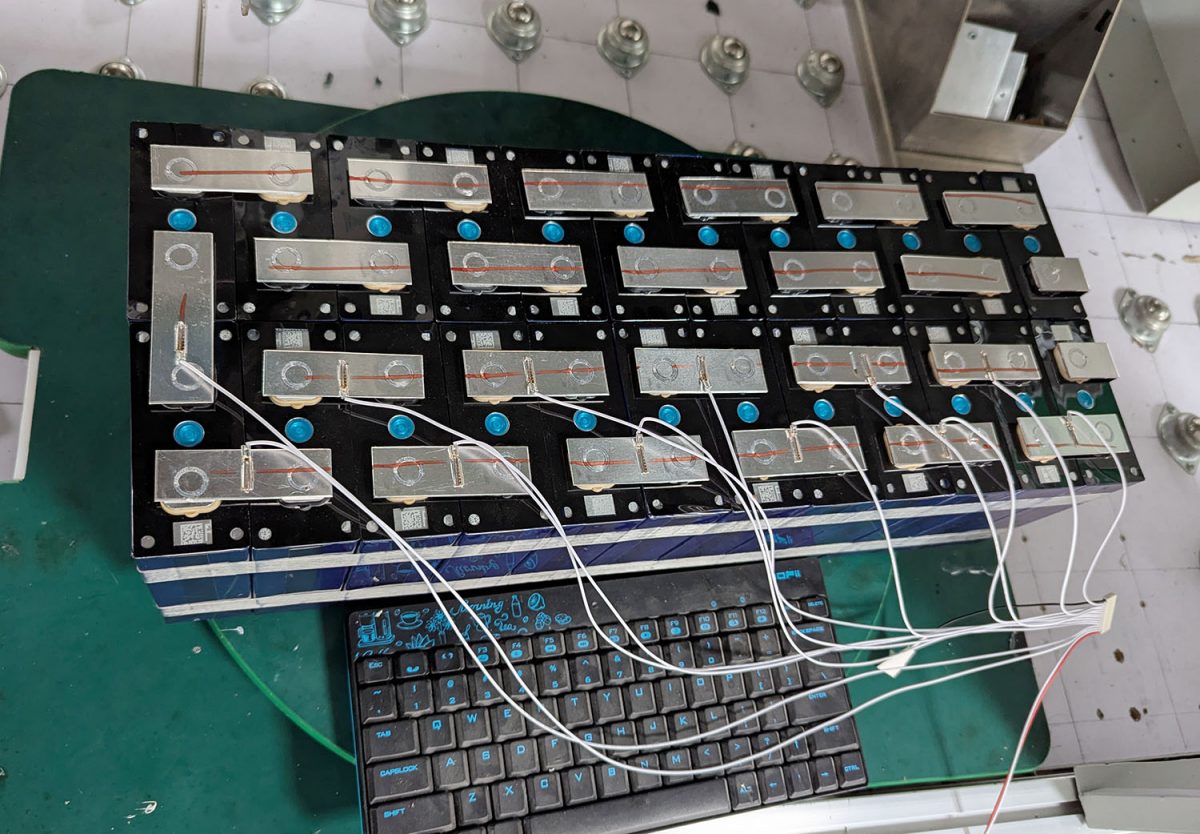
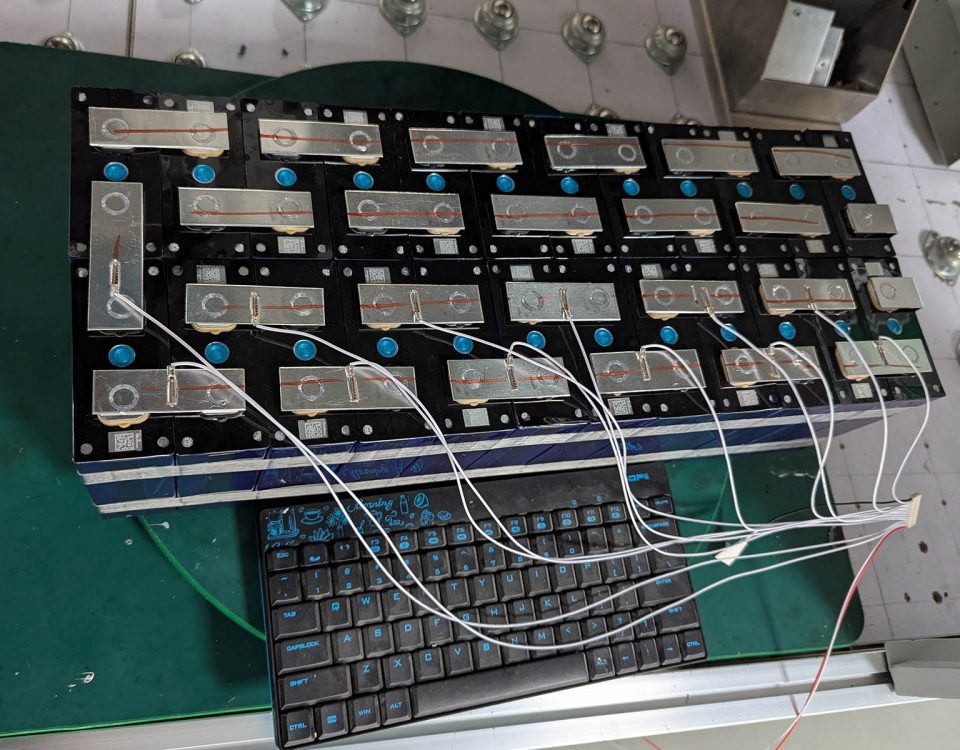
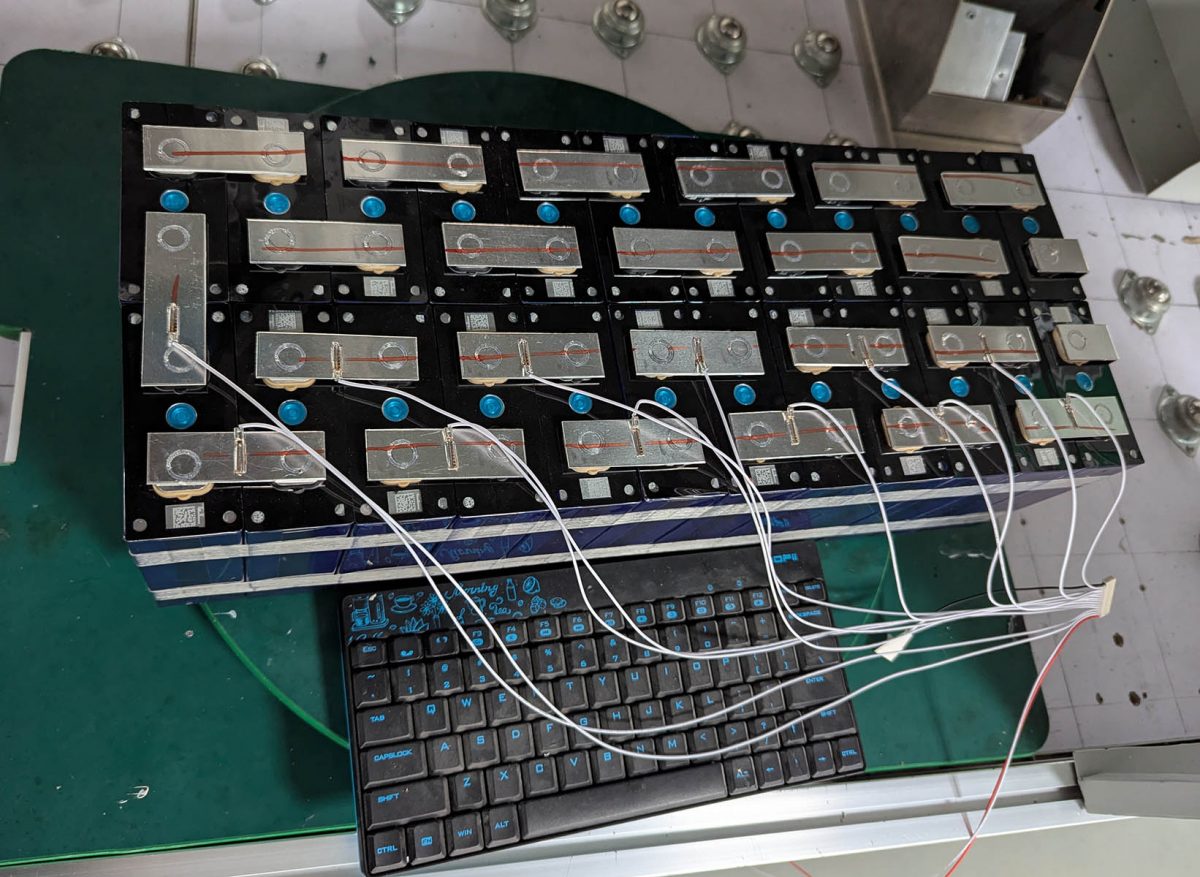
Many real systems combine both: cells or modules are first placed in series to reach a target voltage and then identical series strings are paralleled to reach required capacity. This hybrid topology is powerful but also the most demanding of careful engineering.
Key tradeoffs and practical consequences
-
Voltage vs. current: Higher voltage reduces current for the same power, allowing smaller conductor sizes and lower I²R losses. Conversely, low-voltage, high-current systems require thicker cables and heavier busbars.
-
Failure modes: In a series string, a single weak or failed cell can limit or disable the entire string; in parallel, a single poor cell reduces capacity but the bank often continues operating. This shapes redundancy and maintenance strategies.
-
Balancing and BMS requirements: Series strings require active or passive cell balancing and per-cell monitoring to prevent imbalance; parallel groups require careful matching of internal resistance and state-of-charge across modules to avoid current hogging. A robust Battery Management System (BMS) is mandatory for multi-cell packs.
Sizing conductors and protective devices — concrete rules of thumb
-
Determine maximum continuous current from power and voltage targets (I = P / V). Use this to select cable AWG and fusible protection, adding a safety margin (commonly 25–40%) for start-up surges and ambient temperature derating.
-
Short-circuit current rating: Ensure fuses and breakers have interrupting capacities sufficient for potential fault currents. Overrated protective devices can fail to clear faults quickly; underrated devices can nuisance-trip. Balance is essential.
-
Equal-length leads for parallel strings: Within a parallel bank, keep interconnect lengths and resistances equal so each string shares load current evenly. Small asymmetries translate into steady-state circulating currents and uneven aging.
-
Torque and terminal quality: Tighten terminals to manufacturer torque specifications and use proper crimped lugs; loose joints become high-resistance hotspots that accelerate aging and risk thermal events.
Matching batteries — a non-negotiable design principle
Mixing new and old batteries, cells of different Ah ratings, or modules with disparate internal resistances invites imbalance, excessive stress, and premature failure. Always source matched cells or modules for series strings and match series strings carefully before paralleling. If you must combine modules, perform a rigorous conditioning and balancing protocol under supervision of your BMS or supplier to minimize initial imbalance.
Charging strategy matters — CC–CV and charger selection
Batteries wired in series behave as a single higher-voltage cell during charging; chargers must provide the correct total voltage setpoint and switch from constant-current (CC) to constant-voltage (CV) at the proper point. Parallel banks share charge current but need charge-management that prevents one string from being over- or under-charged. Choose chargers that are rated for your topology and chemistry and ensure the BMS controls termination and balancing. Improper chargers or ignored charge profiles are among the most common causes of early degradation.
Thermal management and mechanical layout
High current densities, tightly packed modules, and poor ventilation accelerate temperature rise and reduce lifespan. Design airflow or conduction paths around cells and modules; consider thermal barriers between series modules to prevent propagation in the unlikely event of a failure. Mechanical mounting should prevent vibration and shock that can cause internal shorts or connector fatigue.
Safety protections — what must be included
-
Per-string fusing (or equivalent protection) so that a single failed string does not feed a catastrophic fault into the rest of the bank.
-
BMS-level cutoffs for over-voltage, under-voltage, over-current, and over-temperature with independent hardware interlocks where possible.
-
Insulation and clearance for the highest bus voltage present in the system; follow regional and equipment standards for creepage and withstand.
-
Regular maintenance and logging: periodic torque checks, thermal scans for hotspots, and review of BMS telemetry for trends in resistance and imbalance.
Commissioning checklist (essential steps before first use)
-
Verify each battery/module voltage and internal resistance; reject or segregate outliers.
-
Confirm all terminal torque values and cable dress.
-
Validate BMS communications and alarms; run a controlled charge/discharge verification cycle.
-
Test fuses/breakers and ensure isolation devices are operational.
-
Document configuration, part numbers, and serials for future warranty and lifecycle planning.
Final design advice: think in systems, not wires
Wiring topology is a systems decision that ties together electrical design, thermal engineering, battery chemistry, and maintenance practice. The safest, most durable battery banks are the ones designed holistically: matched modules, appropriate topology for the mission (series for voltage, parallel for capacity), properly sized conductors and protection, a capable BMS, and disciplined commissioning and monitoring. Specify transparency from vendors — ask for datasheets that include internal resistance, recommended charge profiles, and recommended wiring diagrams — and treat these documents as part of the contract, not optional reading.
When these pieces are aligned, a well-wired battery bank delivers reliable power, predictable maintenance windows, and the operational resilience that modern projects demand.